Three arguments for why virtual worlds prepare us for the real one
I. The Uncertainty Principle
Life rewards pattern recognition under uncertainty. Every decision we make—changing careers, choosing partners, investing resources—operates on incomplete information with probabilistic outcomes.
This is precisely the cognitive architecture of games.
From a neuroscience perspective, gaming activates the brain's reward prediction error system—dopaminergic pathways that calculate the gap between expected and actual outcomes. When a game presents a novel challenge, the prefrontal cortex engages in rapid model-building: constructing hypotheses, testing them against feedback, updating predictions.
This isn't escapism. It's a rehearsal.
The world after 2020 revealed something uncomfortable: stability was an illusion. Traditional education prepared us for static systems—memorize this, repeat that. Gaming prepares us for dynamic ones. Every rogue-like, every strategy game, every competitive match is a lesson in Bayesian updating: revise your beliefs based on new evidence, or fail.
II. The Flow State Argument
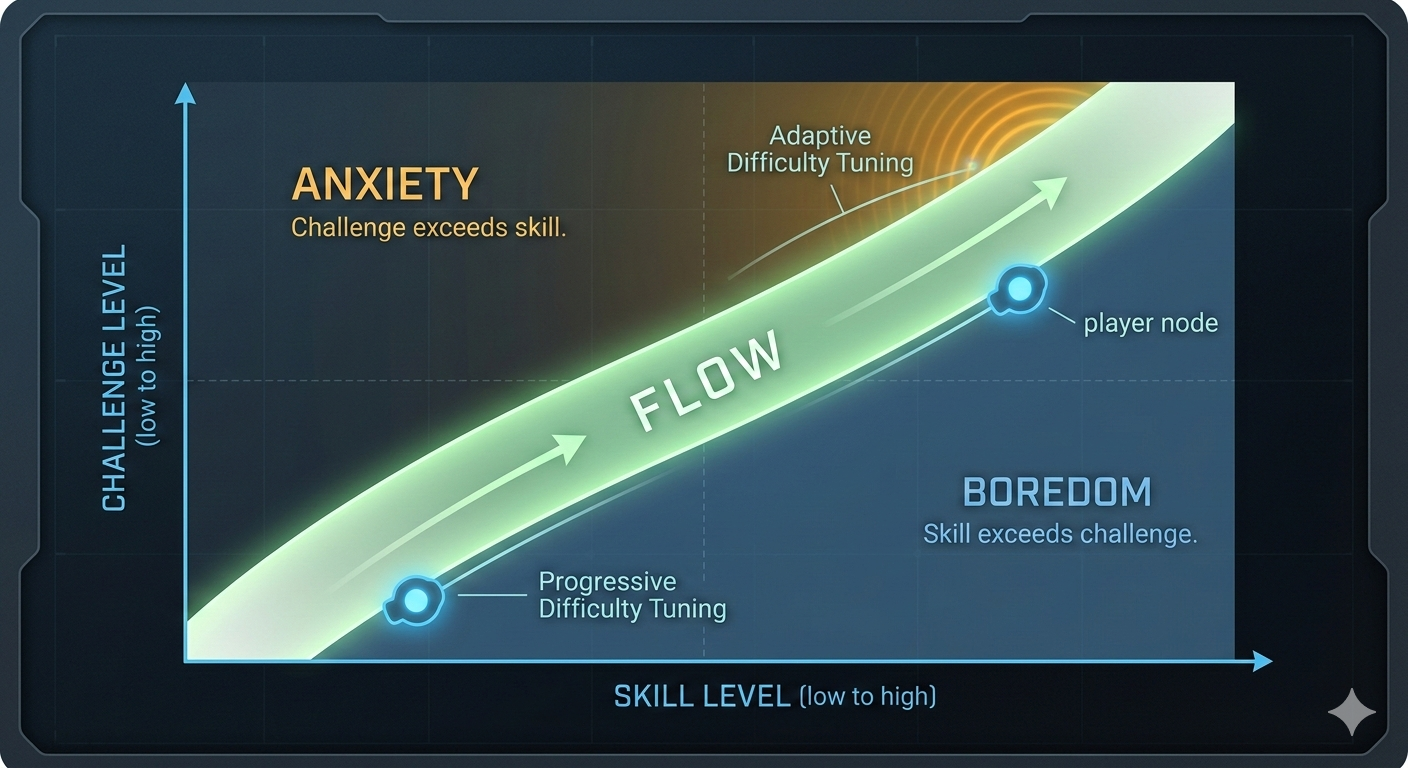
Mihaly Csikszentmihalyi, the psychologist who pioneered flow theory, identified optimal experience as the balance between challenge and skill. Too easy: boredom. Too hard: anxiety. The narrow channel between them: flow.
Games are flow engines.
In an era of algorithmic attention extraction—infinite scroll, notification loops, content optimized for passive consumption—games demand something radical: presence. To play is to be fully engaged. The phenomenological experience of gaming is distinct from other media. Film happens to you. Games happen through you.
Philosophically, this matters. Heidegger spoke of "thrownness"—being cast into a world not of our making. Games offer a counter-experience: worlds where our agency matters, where our choices produce legible consequences. In a political moment defined by helplessness, that's not trivial.
III. The Social Contract 2.0
Hobbes described the state of nature as "solitary, poor, nasty, brutish, and short." His solution was the Leviathan—centralized authority enforcing cooperation.
Multiplayer games propose something different.
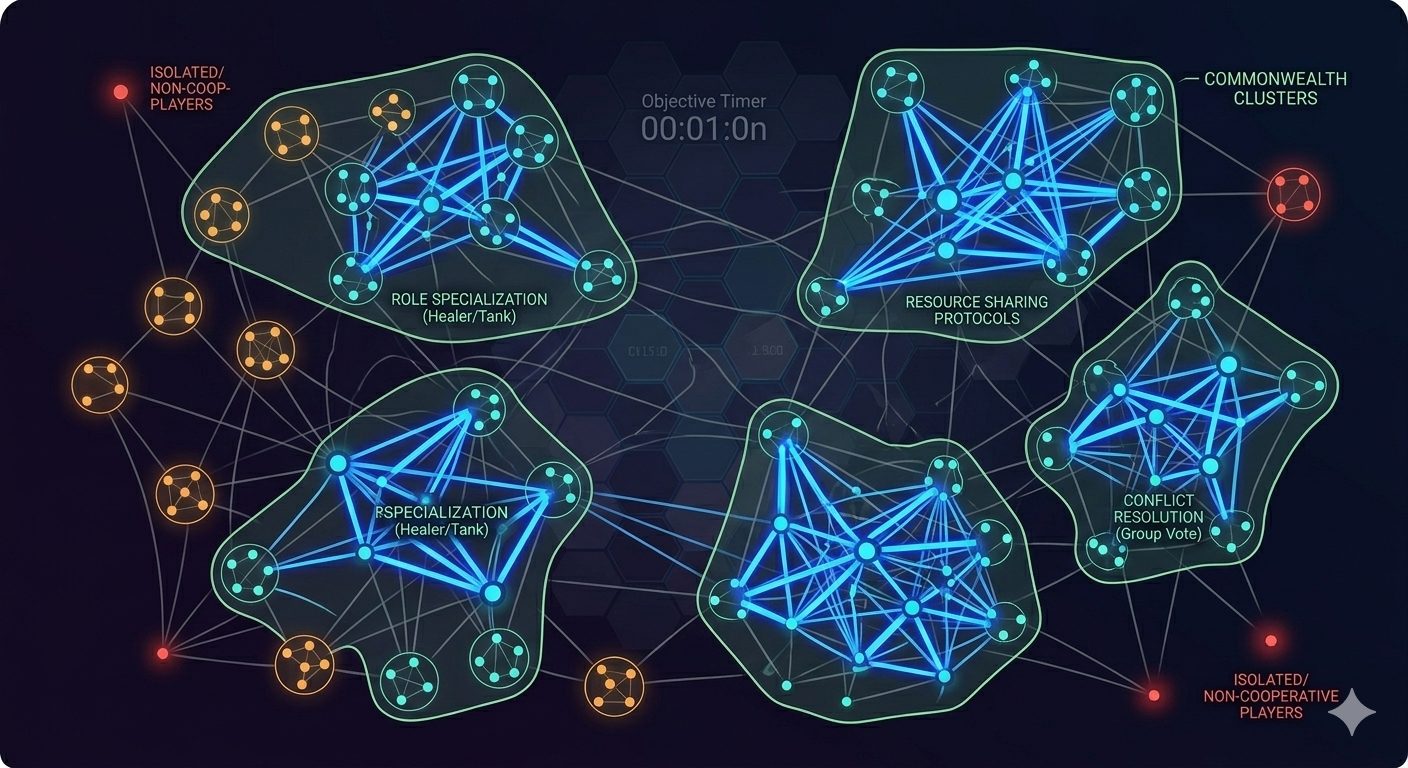
Research from the Virtual Human Interaction Lab at Stanford demonstrates that prosocial behavior in gaming environments correlates with real-world empathy measures. When players coordinate in complex team-based games, they're engaging in spontaneous contract formation: agreeing to shared rules, developing trust through repeated interaction, and sanctioning defectors.
This is institutional economics at the micro scale.
Elinor Ostrom, the only woman to win the Nobel Prize in Economics, spent her career studying how communities manage shared resources without top-down control. Her design principles—clear boundaries, collective choice arrangements, graduated sanctions—map perfectly onto successful gaming communities.
The world needs new models of cooperation. Gaming is a laboratory for them.
Conclusion: The Ontological Shift
Plato's cave allegory haunts our cultural suspicion of screens. The prisoners watch shadows and mistake them for reality. To be virtuous, we must turn toward the sun.
But what if the shadows contain truth?
What if the cave is where we learn to see?
Games don't replace reality. They layer it. They add rule-based systems atop existence, creating what philosophers call "second-order" realities—domains where meaning is both constructed and discovered. In a century where we must constantly reinvent how to live, work, and connect, that capacity for layered perception isn't decadence.
It's survival.
The question isn't whether gaming deserves our attention. The question is whether the world, in its current complexity, can afford for us not to be this prepared.